Small-space gardening is experiencing a massive surge in popularity across the United States. Whether you’re living in a studio apartment in Brooklyn, working with a modest backyard in suburban Chicago, or trying to transform your sunny balcony into a productive oasis in San Diego, growing your own food has never been more accessible—or more rewarding.
The secret? Choosing the right high-yield vegetables that produce abundant harvests without demanding sprawling garden beds. Modern container gardening techniques, compact vegetable varieties, and smart vertical growing strategies mean you can harvest pounds of fresh produce from just a few square feet of space.
In fact, many urban gardeners are discovering they can grow more food in less space than they ever imagined possible. A single well-maintained patio container can yield enough cherry tomatoes for salads all summer. A narrow window box can provide continuous lettuce harvests for months. And a vertical trellis against a wall can support cucumber vines that produce dozens of crisp fruits.
If you’re a beginner looking for a productive vegetable garden for beginners, or an intermediate gardener wanting to maximize your harvest from limited space, this guide is for you. Let’s explore the top 10 high-yield vegetables that thrive in small spaces, along with practical growing tips, container recommendations, and common mistakes to avoid.
What Makes a Vegetable High-Yield in Small Spaces?
Not all vegetables are created equal when it comes to maximizing harvest from limited garden space. The best space-saving vegetables share several key characteristics that make them ideal for small space gardening, container gardening, and urban growing environments.
Fast Growth Rate
High-yield vegetables for small spaces typically mature quickly, allowing you to harvest sooner and potentially fit multiple growing cycles into a single season. Crops like radishes can go from seed to harvest in just 25–30 days, making them incredibly efficient for balcony garden growers and patio garden enthusiasts who want fast results.
Continuous or Repeated Harvesting
The most productive vegetables don’t just give you one harvest—they keep producing. “Cut-and-come-again” crops like lettuce, kale, and Swiss chard allow you to harvest outer leaves while the plant continues growing. Indeterminate cherry tomatoes produce new fruit throughout the season rather than ripening everything at once.
Vertical Growth Habit
Vegetables that grow upward rather than outward are incredibly valuable for urban gardening and small spaces. Pole beans, climbing cucumbers, and trellised tomatoes use vertical space efficiently, producing large harvests while occupying minimal ground area. This makes them perfect for balcony garden setups and narrow patio corners.
Compact Root Systems
Some vegetables have shallow or compact root systems that adapt beautifully to containers and raised beds. These vegetables to grow in pots don’t need deep soil to thrive, making them ideal candidates for container gardening on decks, patios, and apartment balconies.
Container Adaptability
The best vegetables for containers are varieties that have been bred specifically for compact growth. Bush varieties of tomatoes, peppers, and beans perform excellently in pots because they stay manageable while still producing generously. Look for varieties labeled “patio,” “bush,” or “compact” when shopping for seeds or seedlings.
Heavy Production Per Plant
Finally, high-yield vegetables produce a large amount of food relative to their size. A single pepper plant can yield 20–50 peppers over a season. One zucchini plant can overwhelm a small kitchen. These productive vegetables give you the most “bang for your buck” in terms of space and effort.
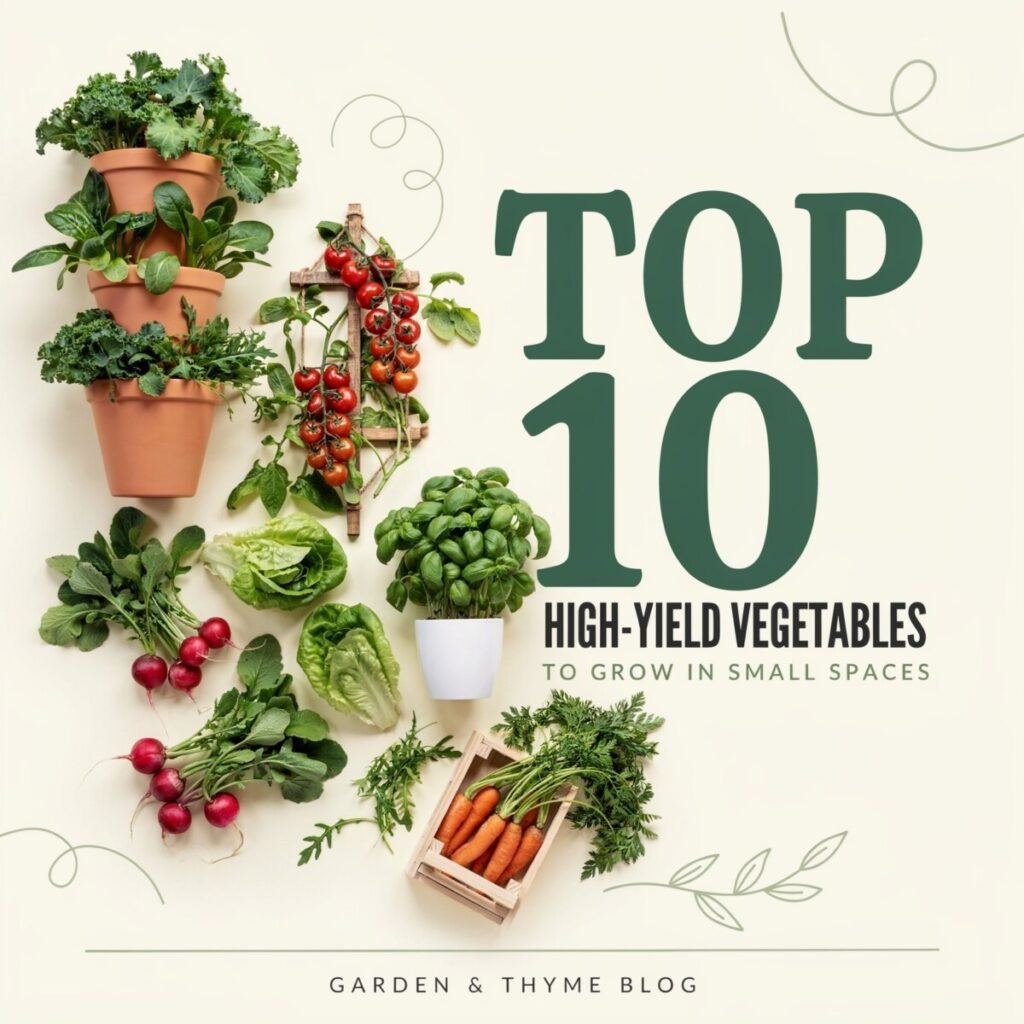
Top 10 High-Yield Vegetables to Grow in Small Spaces
Now let’s dive into the specific vegetables that will give you the biggest harvests from the smallest garden areas. Each of these compact vegetables has proven itself as a reliable, productive choice for American home gardeners working with limited space.
1. Cherry Tomatoes
Why They Excel in Small Spaces:
Cherry tomatoes are arguably the superstar of small-space gardening. These prolific plants produce hundreds of bite-sized fruits throughout the growing season, and many varieties are specifically bred for container growing. Indeterminate varieties keep producing until frost, while compact bush varieties stay manageable on patios and balconies.
Best Growing Method:
For container growing, choose determinate (bush) varieties like ‘Tiny Tim,’ ‘Patio Princess,’ or ‘Tumbling Tom.’ These stay compact and don’t require extensive staking. For maximum yield in a small backyard garden, grow indeterminate varieties like ‘Sweet 100’ or ‘Sun Gold’ in large containers with sturdy cages or stakes.
Container Size and Spacing:
Use a minimum 5-gallon container (larger is better) for bush varieties, and at least 10–15 gallons for indeterminate types. One plant per container is ideal. Place containers where they’ll receive 6–8 hours of direct sunlight daily.
Harvest Benefits:
A single healthy cherry tomato plant can produce 100–300+ fruits over a season. The continuous harvest means you’ll have fresh tomatoes for salads, snacking, and cooking from early summer through fall.
Beginner-Friendly Notes:
Cherry tomatoes are more forgiving than larger tomato varieties and less prone to problems like blossom end rot. Water consistently, feed with a balanced tomato fertilizer every 2–3 weeks, and harvest fruits promptly to encourage more production.
2. Lettuce
Why It Excels in Small Spaces:
Lettuce is the ultimate easy vegetable to grow in small spaces. It has shallow roots, grows quickly, thrives in partial shade, and allows for continuous “cut-and-come-again” harvesting. You can grow multiple varieties in a single container for a colorful, productive salad garden.
Best Growing Method:
Sow seeds directly into containers or raised beds every 2–3 weeks for continuous harvests (succession planting). Loose-leaf varieties like ‘Black Seeded Simpson,’ ‘Red Sails,’ and ‘Salad Bowl’ are ideal for container gardening because you can harvest individual leaves without killing the plant.
Container Size and Spacing:
Use shallow containers at least 6–8 inches deep. Window boxes, grow bags, and wide bowls work beautifully. Sow seeds thinly and thin seedlings to 4–6 inches apart, or harvest baby leaves at 2–3 inches.
Harvest Benefits:
You can begin harvesting baby lettuce leaves just 30 days after planting. With succession planting, you can enjoy fresh lettuce from early spring through late fall in most US climate zones.
Beginner-Friendly Notes:
Lettuce prefers cooler weather and will bolt (go to seed) in summer heat. In warm climates, grow lettuce in spring and fall, or provide afternoon shade during summer. Keep soil consistently moist for tender, sweet leaves.
3. Radishes
Why They Excel in Small Spaces:
Radishes are the speed demons of the vegetable garden. Most varieties mature in just 25–35 days, making them perfect for gardeners who want quick results or who want to fit multiple crops into small spaces throughout the growing season.
Best Growing Method:
Direct sow radish seeds in containers, window boxes, or any available garden space. They’re excellent for filling gaps between slower-growing crops. Spring varieties like ‘Cherry Belle’ and ‘French Breakfast’ grow quickly, while winter radishes like ‘Daikon’ take longer but produce larger roots.
Container Size and Spacing:
Use containers at least 6–8 inches deep. Sow seeds 1/2 inch deep and thin to 2–3 inches apart. Radishes are so compact you can grow dozens in a small container.
Harvest Benefits:
From seed to harvest in under a month, radishes provide instant gratification. They’re also excellent companion plants that help break up soil and deter pests from other vegetables.
Beginner-Friendly Notes:
Radishes are extremely forgiving and rarely bothered by pests. The biggest mistake beginners make is leaving them in the ground too long—they become woody and overly spicy. Harvest promptly when roots reach mature size.
4. Green Onions (Scallions)
Why They Excel in Small Spaces:
Green onions are incredibly space-efficient and can be grown in the smallest containers, including recycled yogurt cups or narrow window boxes. They regrow from cuttings, providing continuous harvests with minimal effort.
Best Growing Method:
You can start green onions from seed, sets (small bulbs), or by regrowing kitchen scraps. Simply place the root ends of store-bought green onions in water or soil, and they’ll regrow in days. Plant in clusters to maximize yield per container.
Container Size and Spacing:
Green onions need containers only 4–6 inches deep. Space plants 1–2 inches apart. A 12-inch pot can hold 20–30 green onion plants, making them exceptionally efficient for balcony garden growing.
Harvest Benefits:
Harvest green onions in 60–80 days from seed, or just 2–3 weeks when regrowing from scraps. Cut leaves as needed, and the plant will continue producing new growth for months.
Beginner-Friendly Notes:
Green onions are among the easiest vegetables to grow and rarely experience problems. They’re perfect for apartment gardeners and can even be grown indoors on a sunny windowsill year-round.
5. Peppers
Why They Excel in Small Spaces:
Peppers are naturally compact plants that produce heavily in containers. Whether you prefer sweet bell peppers or hot varieties like jalapeños and habaneros, pepper plants stay manageable while yielding dozens of fruits per plant.
Best Growing Method:
Choose compact varieties like ‘Lunchbox’ peppers, ‘Cayennetta,’ or ‘Jalapeño M’ for container growing. Start plants indoors 8–10 weeks before your last frost date, or purchase transplants from a garden center. Peppers love heat and need full sun (6–8 hours daily).
Container Size and Spacing:
Use 5-gallon containers for most pepper varieties, or 3-gallon pots for smaller hot pepper types. One plant per container is ideal. Ensure containers have excellent drainage to prevent root rot.
Harvest Benefits:
A single pepper plant can produce 20–50 fruits over a season. Hot pepper varieties often produce even more. Peppers can be harvested green or allowed to ripen to their full color for sweeter flavor and higher nutrient content.
Beginner-Friendly Notes:
Peppers are relatively low-maintenance but need consistent watering and warm temperatures. Feed with a balanced fertilizer when plants begin flowering. Hot peppers are generally easier to grow than large bell peppers in small spaces.
6. Bush Beans and Pole Beans
Why They Excel in Small Spaces:
Beans are nitrogen-fixing powerhouses that improve soil while producing abundant harvests. Bush beans stay compact and don’t require support, while pole beans grow vertically on trellises, making excellent use of vertical space in small backyard garden settings.
Best Growing Method:
Bush beans are ideal for containers and require no staking. Varieties like ‘Provider,’ ‘Contender,’ and ‘Bush Blue Lake’ produce heavily in compact spaces. Pole beans like ‘Kentucky Wonder’ and ‘Blue Lake Pole’ need vertical support but produce over a longer season.
Container Size and Spacing:
For bush beans, use containers at least 8–12 inches deep and 12–18 inches wide. Space plants 4–6 inches apart. For pole beans, use large containers (5+ gallons) with a trellis, teepee, or vertical support structure.
Harvest Benefits:
Bush beans produce their entire crop over 2–3 weeks, perfect for succession planting every 2–3 weeks for continuous harvests. Pole beans produce steadily throughout the growing season, often yielding 15–20 pounds per plant in ideal conditions.
Beginner-Friendly Notes:
Beans are among the best vegetables for containers and are very easy to grow from seed. Don’t over-fertilize with nitrogen—beans make their own. Harvest beans frequently (every 2–3 days) to encourage more production.
7. Spinach
Why It Excels in Small Spaces:
Spinach is a cool-season superstar that grows quickly, thrives in partial shade, and can be harvested as baby leaves or mature plants. It’s perfect for spring and fall growing in containers, window boxes, and small garden beds.
Best Growing Method:
Direct sow spinach seeds in early spring as soon as soil can be worked, and again in late summer for a fall harvest. Varieties like ‘Bloomsdale Long Standing,’ ‘Space,’ and ‘Baby’s Leaf’ are excellent for container growing. Use shade cloth or plant in partial shade during warm weather to prevent bolting.
Container Size and Spacing:
Use containers at least 6–8 inches deep. Sow seeds 1/2 inch deep and thin to 3–4 inches apart for full-size leaves, or leave closer spacing for baby leaf harvest.
Harvest Benefits:
Baby spinach leaves can be harvested just 30–40 days after planting. Cut outer leaves for continuous harvest, or harvest entire plants when mature.
Beginner-Friendly Notes:
Spinach bolts quickly in heat, so timing is crucial. In warmer US zones, focus on spring and fall crops. Keep soil consistently moist and cool for the sweetest, most tender leaves.
8. Beets
Why They Excel in Small Spaces:
Beets are a two-for-one crop—both the roots and the leafy greens are delicious and nutritious. They’re compact, relatively fast-growing, and thrive in containers and raised beds.
Best Growing Method:
Direct sow beet seeds in containers or small garden beds. Varieties like ‘Detroit Dark Red,’ ‘Golden,’ and ‘Chioggia’ grow well in limited space. Each beet “seed” is actually a cluster of 2–4 seeds, so thinning is essential.
Container Size and Spacing:
Use containers at least 10–12 inches deep to accommodate root growth. Thin seedlings to 3–4 inches apart. You can harvest greens while roots are still developing.
Harvest Benefits:
Beet greens can be harvested continuously starting at 30 days. Roots mature in 50–70 days, and you can harvest them at any size—from baby beets to full-size roots.
Beginner-Friendly Notes:
Beets are fairly low-maintenance but need consistent moisture for tender roots. Thin seedlings promptly to prevent competition. The greens are often more nutritious than the roots, so don’t discard them!
9. Cucumbers
Why They Excel in Small Spaces:
Cucumbers are vigorous producers that can be grown vertically, saving valuable ground space. Bush varieties stay compact for container growing, while vining varieties climb trellises and produce heavily.
Best Growing Method:
Choose bush varieties like ‘Spacemaster,’ ‘Bush Champion,’ or ‘Picklebush’ for containers. Vining types like ‘Marketmore 76’ and ‘Lemon’ cucumber need vertical support but produce more fruit per plant. Trellising also keeps fruit clean and reduces disease problems.
Container Size and Spacing:
Bush cucumbers need 5-gallon containers minimum. Vining types require large containers (10+ gallons) with sturdy trellises. Plant one cucumber per container and train vines upward.
Harvest Benefits:
A healthy cucumber plant can produce 10–20 pounds of fruit over a season. Harvest fruits frequently (every 1–2 days during peak production) to encourage continued production.
Beginner-Friendly Notes:
Cucumbers need consistent watering to prevent bitter fruit. Mulch containers to retain moisture and keep roots cool. Watch for powdery mildew and treat promptly with organic fungicides if needed.
10. Kale and Swiss Chard
Why They Excel in Small Spaces:
Kale and Swiss chard are cut-and-come-again champions that produce continuously for months. These hardy greens thrive in containers, tolerate partial shade, and can even overwinter in mild climates for year-round harvests.
Best Growing Method:
Start from transplants for quickest results, or direct sow seeds in containers. Kale varieties like ‘Dwarf Blue Curled Vates,’ ‘Red Russian,’ and ‘Lacinato’ are compact and productive. Swiss chard varieties like ‘Bright Lights’ and ‘Fordhook Giant’ add color and continuous harvests to any patio garden.
Container Size and Spacing:
Use containers at least 10–12 inches deep and 12–18 inches wide. Space plants 8–12 inches apart for full-size leaves, or closer for baby leaf harvest.
Harvest Benefits:
Begin harvesting outer leaves at 30–45 days, and plants will continue producing for months. In many US zones, kale and chard survive light frosts and can be harvested well into winter.
Beginner-Friendly Notes:
These are among the most productive vegetables you can grow in small spaces. Watch for cabbage worms on kale and hand-pick or use BT spray for control. Both crops become sweeter after light frost.
Best Growing Tips for Small-Space Gardens
Growing high-yield vegetables in limited space requires smart strategies. Here are the essential tips that will help you maximize every square foot of your garden.
Use Vertical Supports
Vertical gardening is essential for small space gardening. Trellises, cages, stakes, and arbors allow vining crops to grow upward rather than outward. Install vertical supports at planting time to avoid disturbing roots later. Use wall-mounted planters, hanging baskets, and railing planters to capture every available growing surface.
Choose Containers with Proper Drainage
All vegetables to grow in pots need containers with drainage holes to prevent waterlogged soil and root rot. Use high-quality potting mix (never garden soil) that provides good drainage and aeration. Consider self-watering containers for busy urban gardeners who may forget to water.
Feed Plants Regularly
Container plants deplete nutrients faster than garden-grown vegetables. Feed your plants with organic liquid fertilizer every 2–3 weeks during the growing season. Use balanced fertilizers for leafy greens and fruit-producing formulas for tomatoes, peppers, and other fruiting crops.
Harvest Often for Regrowth
Frequent harvesting signals plants to produce more. Pick lettuce, kale, and chard leaves regularly. Harvest beans, cucumbers, and zucchini every 1–2 days during peak production. Remove mature fruits promptly to encourage continued flowering and fruiting.
Practice Succession Planting
Succession planting means sowing new crops every 2–3 weeks to ensure continuous harvests. When one crop finishes, immediately plant another. Fast-growing crops like radishes, lettuce, and bush beans are perfect for succession planting in small backyard garden beds and containers.
Match Crops to Sun Exposure
Most fruiting vegetables need 6–8 hours of direct sun daily, while leafy greens tolerate partial shade (4–6 hours). Observe your space throughout the day and plant accordingly. Use shadier spots for lettuce, spinach, and kale, and reserve the sunniest locations for tomatoes, peppers, and cucumbers.
Best Vegetables for Containers and Raised Beds
Different growing methods suit different vegetables. Here’s a quick guide to help you choose the right approach.
Best Vegetables for Containers and Pots
- Cherry tomatoes (bush varieties)
- Peppers (all types)
- Lettuce and salad greens
- Green onions and herbs
- Radishes
- Bush beans
- Dwarf cucumbers
- Compact kale varieties
Best Vegetables for Window Boxes
- Lettuce and salad mixes
- Radishes
- Green onions
- Herbs (basil, cilantro, parsley)
- Baby spinach
Best Vegetables for Grow Bags
- Tomatoes (5+ gallon bags)
- Potatoes
- Peppers
- Eggplant
- Bush squash varieties
Best Vegetables for Raised Beds
- All vegetables listed above
- Carrots (deeper beds)
- Beets
- Pole beans (with trellis)
- Compact squash varieties
- Swiss chard
Best Vegetables by Space Type
| Space Type | Best Vegetables | Container Recommendations |
|---|---|---|
| Apartment Balcony | Cherry tomatoes, peppers, lettuce, herbs | Railing planters, hanging baskets, 5-gallon pots |
| Small Patio | Bush beans, cucumbers (vertical), greens, radishes | Large containers, vertical trellises, grow bags |
| Sunny Windowsill | Lettuce, herbs, green onions, microgreens | Shallow trays, window boxes, small pots |
| Small Backyard | All top 10 vegetables, plus compact squash | Raised beds, large containers, vertical gardens |
| Urban Rooftop | Tomatoes, peppers, beans, cucumbers, greens | Lightweight containers, self-watering systems |
Seasonal Planting Tips for Small-Space Gardens
Spring (March–May)
Start the season with cool-weather crops like lettuce, spinach, radishes, and peas. Transition to warm-season crops (tomatoes, peppers, beans) after your last frost date. Use season extension techniques like row covers to get an early start.
Summer (June–August)
Focus on heat-loving crops like tomatoes, peppers, cucumbers, and beans. Provide afternoon shade for cool-weather crops or take a break from lettuce and spinach. Succession plant bush beans every 2–3 weeks for continuous harvests.
Fall (September–November)
Return to cool-weather crops for a second growing season. Plant lettuce, spinach, kale, radishes, and carrots in late summer for fall harvests. Many crops become sweeter after light frost and can be harvested well into winter in mild climates.
Common Mistakes to Avoid
Even experienced gardeners make mistakes when growing in small spaces. Avoid these common pitfalls to ensure success:
Overcrowding Plants
It’s tempting to squeeze as many plants as possible into limited space, but overcrowding leads to poor air circulation, disease problems, and reduced yields. Follow spacing recommendations and thin seedlings promptly.
Underfeeding Container Plants
Container soil loses nutrients quickly through watering. Without regular fertilization, plants will become stunted and unproductive. Feed consistently with appropriate fertilizers for each crop type.
Poor Sunlight Planning
Don’t assume all areas of your balcony or patio receive the same amount of sun. Observe light patterns throughout the day and match plants to their sun requirements. Use reflective surfaces to boost light in shady areas.
Using Containers That Are Too Small
Tiny pots dry out quickly and restrict root growth, leading to stressed, unproductive plants. When in doubt, choose larger containers. Most vegetables perform better in oversized pots than cramped ones.
Choosing Sprawling Varieties
Many vegetable varieties are bred for large garden spaces and will quickly overwhelm small growing areas. Always select compact, bush, patio, or container-specific varieties for the best results in limited spaces.
Neglecting Consistent Watering
Containers dry out much faster than garden beds, especially during hot weather. Check soil moisture daily and water when the top inch feels dry. Consider drip irrigation or self-watering containers for busy schedules.
Recommended Vegetables by Garden Type
Best for Balcony Gardens
- Cherry tomatoes (bush varieties)
- Compact peppers
- Lettuce and herbs
- Green onions
- Radishes
Best for Patio Gardens
- All top 10 vegetables
- Bush cucumbers (trellised)
- Pole beans (vertical)
- Compact squash
- Swiss chard
Best for Container Gardens
- Cherry tomatoes
- Peppers
- Lettuce mixes
- Bush beans
- Radishes
- Herbs
Conclusion
Small-space gardening proves that you don’t need a sprawling backyard to grow abundant, fresh vegetables. By choosing the right high-yield vegetables and using smart growing strategies, you can transform even the tiniest balcony, patio, or small backyard garden into a productive food-producing oasis.
The top 10 vegetables covered in this guide—cherry tomatoes, lettuce, radishes, green onions, peppers, beans, spinach, beets, cucumbers, and kale/chard—have proven track records of delivering impressive harvests from limited space. They’re compact vegetables that thrive in containers, grow quickly, and offer continuous harvests throughout the growing season.
Whether you’re a beginner starting your first vegetable garden for beginners or an experienced gardener looking to maximize productivity, these vegetables will help you grow more food in less space. Start with just a few containers, learn as you go, and watch your small-space garden flourish.
Remember, the key to successful small space gardening is choosing the right plants, providing consistent care, and harvesting frequently to encourage continued production. With these easy vegetables to grow and the practical tips shared in this guide, you’re well on your way to enjoying fresh, homegrown vegetables from your own small-space garden.
Happy gardening!
Frequently Asked Questions (FAQ)
1. What are the easiest vegetables to grow in small containers?
The easiest vegetables for containers include lettuce, radishes, green onions, cherry tomatoes (bush varieties), and herbs like basil and cilantro. These crops are forgiving, grow quickly, and don’t require extensive maintenance—making them perfect for beginners and apartment dwellers.
2. How deep should containers be for growing vegetables?
Container depth depends on the vegetable. Shallow-rooted crops like lettuce, radishes, and herbs need only 6–8 inches of soil depth. Medium-rooted vegetables like peppers, bush beans, and beets require 10–12 inches. Deep-rooted crops like tomatoes and cucumbers need containers at least 12–18 inches deep for best results.
3. Can I grow vegetables on a shady balcony?
Yes! While most fruiting vegetables need full sun, you can successfully grow shade-tolerant vegetables in partial shade (4–6 hours of sun). Lettuce, spinach, kale, Swiss chard, and many herbs perform well in shadier conditions. Avoid tomatoes, peppers, and other sun-loving crops in heavily shaded areas.
4. How often should I water vegetables in containers?
Container vegetables typically need watering more frequently than garden-grown plants—often daily during hot summer weather. Check soil moisture by sticking your finger 1 inch into the soil; water when it feels dry. Morning watering is best, and mulching helps retain moisture. Self-watering containers can reduce watering frequency.
5. What is succession planting and how does it help small-space gardens?
Succession planting means sowing new crops at regular intervals (every 2–3 weeks) to ensure continuous harvests rather than one large harvest. In small-space gardens, succession planting maximizes productivity by keeping containers and beds actively producing throughout the growing season. Fast-growing crops like radishes, lettuce, and bush beans are ideal for succession planting.