It’s mid-July, and you’re standing in your backyard or tending to your urban raised-bed garden. You’ve watered diligently, applied the right fertilizers, and staked your vines perfectly. Yet, your tomato plants are struggling. The leaves are curled and stippled from aphids, a massive green hornworm is chewing through your prized heirlooms, and a cloud of whiteflies erupts every time you brush past the foliage. To make matters worse, despite all your hard work, the harvest is disappointingly small. If this sounds familiar, you aren’t alone. Millions of US home gardeners face these exact frustrations every growing season.
Fortunately, there is a time-tested, chemical-free solution hiding in plain sight: tomato companion planting. In plain language, this means strategically placing specific herbs, flowers, and vegetables near your tomato vines to naturally deter pests, attract beneficial insects, and improve overall plant health.
In this tomato companion plant guide, you’ll learn the best companion plants for tomatoes that help prevent pests and boost yield, along with simple layout and care tips you can use in any US garden—whether you’re growing in a sprawling backyard bed, a patio container, or a community garden plot. By embracing organic pest control for tomatoes and exploring natural tomato pest solutions, you can transform your struggling vines into a thriving food source. Let’s dive into the secrets of companion planting for higher tomato yields and get your backyard vegetable garden producing beautifully this season, utilizing the best raised bed tomato gardening strategies available.
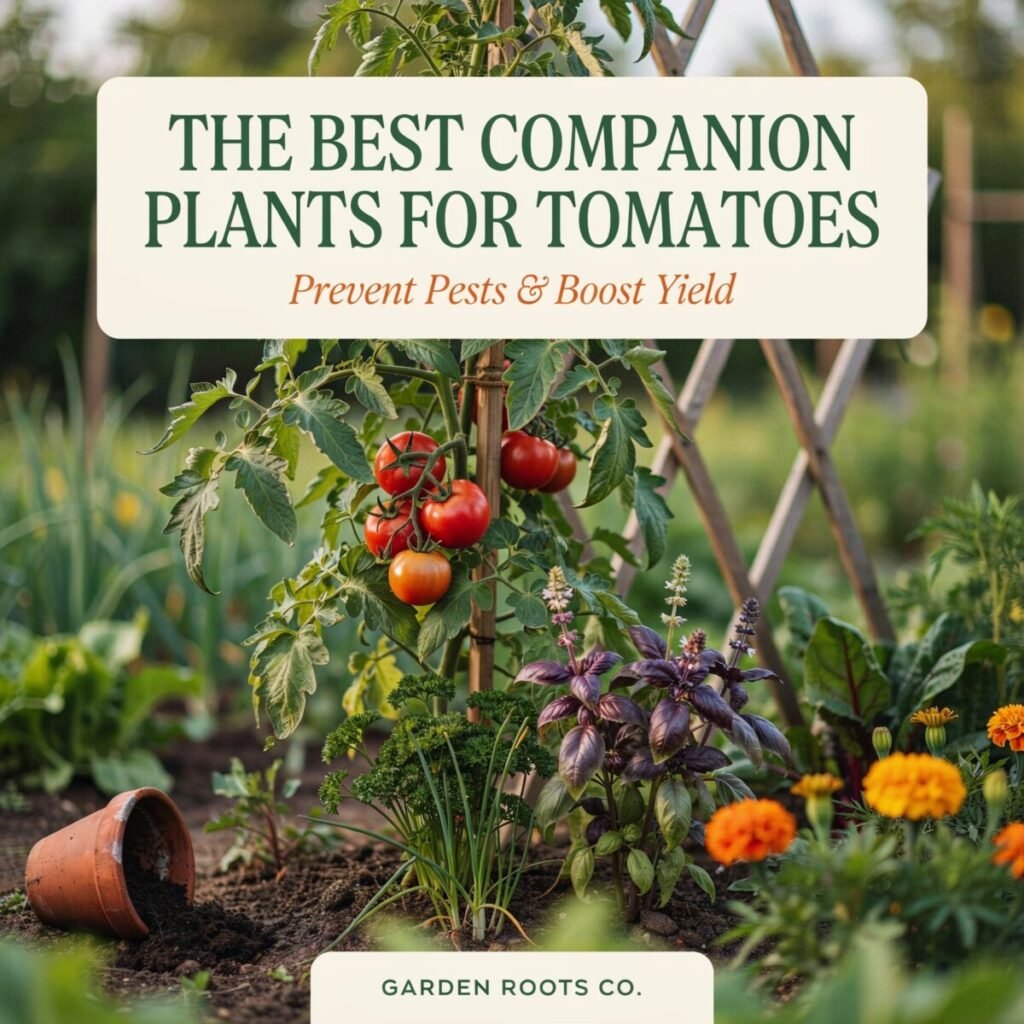
Why Companion Planting Works for Tomatoes
To truly understand the benefits of companion planting, it helps to look at how different plants interact in a shared ecosystem. Plants communicate and influence their surroundings through strong scents, root exudates (chemicals released into the soil), physical shade, and by acting as beacons for local wildlife.
When it comes to organic gardening for US homeowners, the pest-control angle is perhaps the most exciting. Certain aromatic herbs and pungent flowers mask the scent of tomatoes, effectively hiding them from pests. This provides excellent tomato hornworm control and aphid control for tomatoes, as well as protection against spider mites and fruitworms. Other plants act as “trap crops,” intentionally luring destructive insects away from your main harvest. Meanwhile, some companions serve as landing pads for beneficial insects in the garden—such as ladybugs, lacewings, and parasitic wasps—that prey on soft-bodied pests.
Beyond just defense, companion planting actively supports growth. The relationship between pollination and tomato yield is direct; increased bee traffic from flowering companions leads to better fruit set and a heavier harvest. Deep-rooted companions can bring up nutrients, while others improve the local microclimate. Furthermore, aromatic herbs can reduce disease pressure by improving air flow and discouraging the harmful insects that vector plant viruses.
The beauty of this method is its adaptability. Companion planting works across diverse US climate zones, from the hot, humid southern states to the cooler, shorter-season northern regions, requiring only slight adjustments in plant choice and timing. For example, planting basil and marigolds around your tomato bed can drastically reduce pest pressure and help you harvest more ripe, blemish-free tomatoes with fewer sprays.
Best Companion Plants for Tomatoes to Prevent Pests
3.1 Basil: The Classic Tomato Partner
Basil and tomatoes are a match made in heaven, both on the dinner plate and in the garden. As one of the most popular herbs to plant with tomatoes, basil emits a strong, volatile scent that helps repel aphids, whiteflies, spider mites, and thrips. Many veteran gardeners also swear that using basil for tomato pests actually improves the flavor and vigor of the tomatoes themselves.
For practical application, plant basil around the base of your tomato plants or in a ring around the perimeter of your raised bed. Ensure both get plenty of sun and consistent moisture. Basil is incredibly easy to grow in pots on a patio or deck, making it a perfect partner for container-grown tomatoes in small urban spaces.
3.2 Marigolds: Natural Defense Against Tomato Hornworms and Nematodes
When it comes to flowers for tomato pest control, marigolds for tomatoes are the undisputed champions. Their pungent fragrance is highly effective at masking the scent of your crops, providing excellent tomato hornworm prevention and deterring other chewing pests. Furthermore, certain varieties of French marigolds produce a chemical in their roots that helps reduce destructive soil nematodes.
Plant marigolds along the borders of your tomato beds, between rows, or right in front of your stakes and cages. They thrive in full sun and tolerate a wide variety of US soil types. A quick care tip: be sure to deadhead (remove spent blooms) regularly to keep them flowering all season long, ensuring ongoing, uninterrupted pest protection.
3.3 Nasturtiums: Trap Crop for Aphids and Whiteflies
If you are looking for effective organic aphid control, look no further than nasturtiums. These vibrant, trailing flowers serve as excellent trap crops for tomatoes. Nasturtiums naturally attract aphids and other soft-bodied pests, pulling them away from your precious tomato vines, effectively managing nasturtiums and tomato aphids dynamics.
To use them effectively, plant nasturtiums a short distance from your tomatoes rather than right next to them, so the pests cluster on the nasturtium foliage instead. Check them regularly and remove heavily infested leaves. US gardeners can easily grow them as a colorful groundcover around raised beds or let them spill beautifully from the edges of large containers.
3.4 Borage: Pest Repellent and Pollinator Magnet
The borage companion plant is a powerhouse that offers dual benefits. Its prickly stems and distinct scent act as a natural hornworm repellent, keeping those massive green caterpillars at bay. Simultaneously, its stunning blue, star-shaped flowers are an absolute magnet for pollinators for tomatoes, which is crucial for maximizing your harvest.
Plant borage near your tomato plants, but give it enough space so it doesn’t shade them out. Be aware that borage readily self-seeds, so US gardeners who prefer a highly manicured bed should manage the volunteers. As a bonus, the flowers and young leaves are entirely edible and make a beautiful, cucumber-flavored addition to summer salads!
3.5 Dill and Fennel: Attractors of Beneficial Insects
Growing dill with tomatoes is a fantastic strategy for recruiting beneficial insects for tomato pest control. When allowed to flower, dill’s umbrella-shaped blooms attract ladybugs in the garden, as well as lacewings and parasitic wasps that aggressively hunt down aphids and caterpillars.
Plant dill near your tomatoes, but ensure it doesn’t cast too much shade; let some of it bolt and flower to maximize its insect-attracting power. Fennel offers similar benefits but can be much more aggressive and allelopathic (inhibiting the growth of nearby plants). It’s best to grow fennel nearby in a separate herb border rather than right next to your tomatoes if space allows.
3.6 Garlic, Onions, and Chives: Strong Scent Pest Deterrents
The allium family provides incredible, low-maintenance defense. The strong sulfurous scent of garlic near tomatoes, along with onion companion plants and chives and tomato pest control strategies, effectively deters aphids, spider mites, slugs, and even some species of beetles.
Because they take up very little horizontal space, they are easy to tuck into the edges of raised beds or plant directly between your tomato vines. Use perennial chives as a low, decorative border around your tomato beds, and plant garlic or onion sets in nearby rows. This is a highly efficient use of space, allowing US gardeners to harvest both juicy tomatoes and pungent alliums from the same small backyard footprint.
3.7 Sweet Alyssum and Other Beneficial Flowers
Low-growing, flowering plants like the sweet alyssum companion plant are fantastic additions to a healthy garden. The tiny, honey-scented flowers attract a host of tiny, beneficial parasitic wasps that prey on tomato pests. Additionally, they act as a fantastic living mulch for tomato beds, covering bare soil to retain moisture and discourage weeds.
Try mixing alyssum with other flowers to plant with tomatoes, such as calendula or cosmos. These low-profile blooms are highly suitable for US gardeners utilizing ornamental vegetable gardens, border plantings, or small front-yard food plots where aesthetics and productivity must beautifully coexist.
Companion Plants That Boost Tomato Yield and Overall Health
While keeping pests at bay is crucial, the ultimate goal for most backyard vegetable gardening in the US is a massive, delicious harvest. Certain companion plants indirectly but powerfully help you increase tomato yield and improve overall plant health. For instance, improved pollination from flowering companions like borage and marigolds leads to a higher fruit set, meaning more tomatoes per plant. Furthermore, better soil structure and local biodiversity reduce environmental stress, making your tomatoes far more resilient to sudden weather shifts and disease outbreaks.
Consider how groundcovers like nasturtiums or sweet alyssum act as a physical barrier. By covering the soil, they prevent rainwater from splashing fungal spores from the dirt up onto the lower tomato leaves, significantly reducing the risk of early blight and septoria leaf spot. Meanwhile, harvesting herbs like basil from the same bed improves airflow around the lower tomato stems, further discouraging fungal diseases. Creating a pollinator-friendly tomato bed ensures that blossoms are thoroughly fertilized, preventing blossom drop and maximizing your output.
Let’s look at a simple companion planting layout for a US backyard raised bed companion planting setup: Picture a central row or block of indeterminate tomatoes staked tall in the middle. Interplant basil and marigolds directly around the base of the tomato stakes. Along the outer edge of the bed, plant a border of nasturtiums to act as a trap crop. Tuck garlic or onions along one sunny side, and use sweet alyssum as a low groundcover to fill in any remaining gaps. This creates a highly efficient, high-yield tomato garden ecosystem.
Even container gardeners can easily adapt this strategy. Simply mix a compact, determinate tomato variety with a basil plant and a marigold in one large, deep pot. Alternatively, position several companion pots closely together on a balcony or patio to create a mini-ecosystem that increases tomato yield naturally, proving that you don’t need acres of land to succeed.
What NOT to Plant with Tomatoes
Just as some plants are best friends, others are terrible neighbors. Knowing the worst companion plants for tomatoes is just as important as knowing what to plant. First, avoid planting tomatoes near potatoes or other nightshades like eggplants and peppers. Because they are in the same botanical family, they share susceptibility to the same devastating soil-borne diseases, such as early and late blight, and can easily cross-contaminate.
Second, keep your tomatoes away from corn. The pest known as the corn earworm is the exact same insect as the tomato fruitworm; planting them together creates an all-you-can-eat buffet that will decimate both crops.
Finally, avoid planting near tomatoes heavy-feeding brassicas like cabbage, broccoli, cauliflower, or kale. These crops compete heavily for the same soil nutrients and moisture, which can severely reduce tomato vigor and yield. As a general rule, always avoid crowding your vines with large, nutrient-hungry plants that block crucial sunlight or restrict airflow. Always research specific plant combinations before mixing crops in small beds to minimize your tomato disease and pest risk.
Simple Companion Planting Tips for US Home Gardeners
To ensure your companion planting for beginners is a success, keep these practical tomato garden care tips in mind. First, respect space and sunlight. Tomatoes are sun-worshippers that require 6–8 hours of direct sunlight, which is standard for many US regions. Do not overcrowd your beds; companions should support and protect your tomatoes, not smother them or steal their light.
Timing is also critical. Plant fast-growing herbs and flowers like basil, marigolds, and alyssum shortly after your tomato transplants go into the ground. If you live in a cooler northern climate with a short growing season, start these companions indoors a few weeks earlier to give them a head start before the last frost date.
When it comes to soil and watering, use well-drained soil heavily amended with organic compost. Ensure your chosen companions share similar water needs with tomatoes, which generally prefer deep, infrequent watering rather than shallow, daily sprinklings.
For true organic tomato pest management, combine companion planting with good garden hygiene. Promptly remove diseased leaves, practice crop rotation year over year, and use organic mulch. Remember, companions reduce your reliance on synthetic pesticides, making your backyard much safer for kids, pets, and local pollinators.
Finally, embrace experimentation! The US is vast, and gardening in the humid Southeast is vastly different from the arid Southwest or the chilly Pacific Northwest. Keep a garden journal and take notes each season on which companion plants worked best in your specific US region or microclimate. These personalized US home gardening tips will become your most valuable resource over time.
Conclusion
Companion planting is a remarkably simple, entirely natural way to protect your tomatoes from destructive pests while simultaneously boosting your overall yield. It is especially highly effective in small US home gardens where space is at a premium and chemical sprays are undesirable. By utilizing star companions like basil, marigolds, nasturtiums, borage, dill, garlic, and sweet alyssum, you can cultivate a thriving, self-regulating ecosystem right in your backyard.
You don’t need to overhaul your entire garden to see results. We highly encourage you to start small this season. Even adding just a few pots of basil and a border of marigolds to your tomato bed this year can make a highly noticeable difference in pest pressure and harvest size. These beginner-friendly tomato tips are designed to give you quick wins.
Ready to take your organic tomato gardening to the next level? Sign up for our weekly backyard gardening newsletter to receive more seasonal planting guides and organic pest tricks delivered straight to your inbox. Don’t forget to download our free “Tomato Companion Planting Cheat Sheet” to keep in your garden shed, and be sure to check out our related posts on advanced organic pest control and raised bed layouts to guarantee a bountiful backyard tomato harvest this summer!