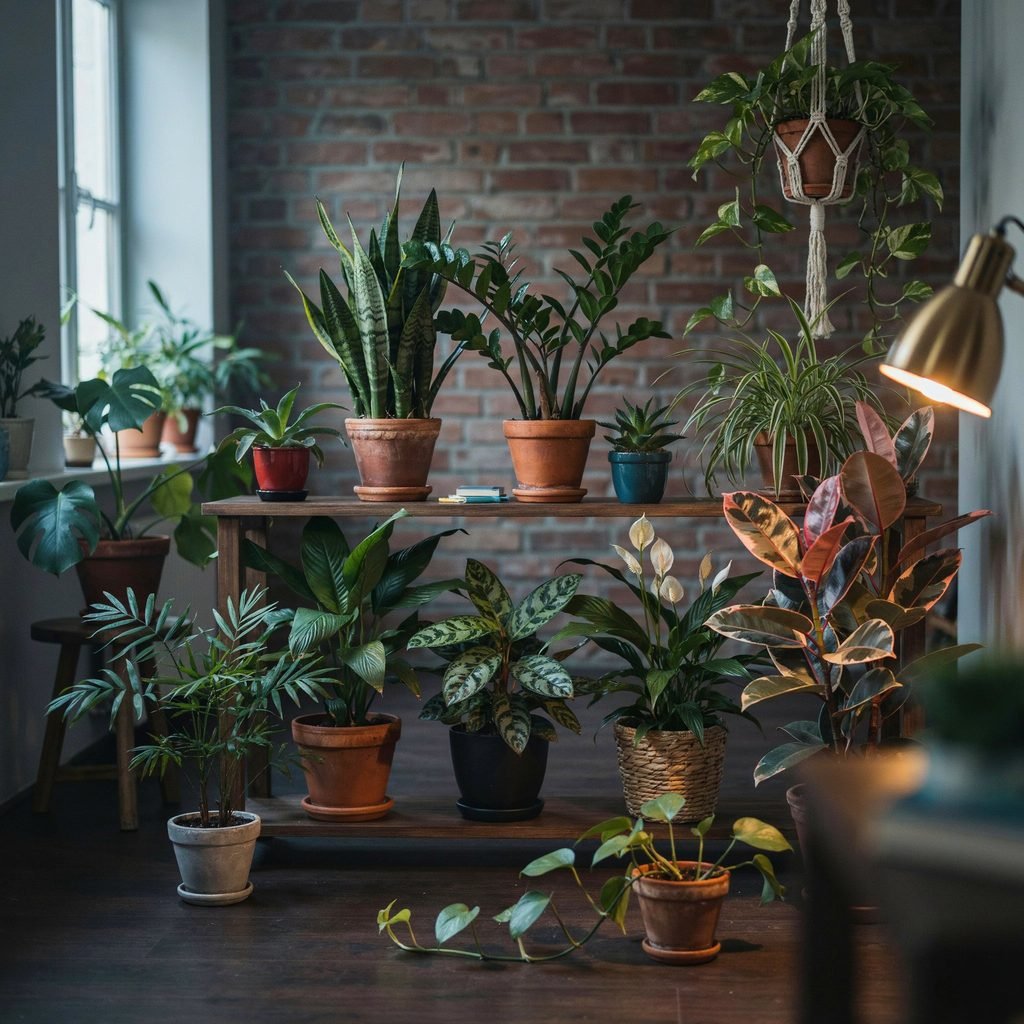
There’s a reason the Monstera deliciosa has become one of the most beloved houseplants in American homes. Those dramatic, heart-shaped leaves with their iconic splits and holes turn a plain corner into a tropical statement. And here’s the good news: despite its exotic looks, Monstera deliciosa care is surprisingly manageable once you understand a few core principles.
Whether you’re setting up your first indoor plant in a small apartment, adding greenery to a home office, or expanding an already-thriving collection, this guide walks you through everything you need to know about how to care for Monstera deliciosa. From dialing in the right light to propagating new plants from a single stem cutting, let’s get your Swiss cheese plant thriving.
What Is Monstera Deliciosa?
Monstera deliciosa is a tropical houseplant native to the rainforests of southern Mexico and Central America. In the wild, it’s a climbing plant that scales tree trunks using thick aerial roots, eventually producing leaves up to three feet wide. Indoors, you’ll typically see leaves ranging from 8 to 18 inches across, depending on light, support, and maturity.
You might hear this plant called by several common names:
- Swiss cheese plant – because the leaf holes resemble Swiss cheese
- Split-leaf philodendron – a popular (though technically inaccurate) nickname
- Fruit salad plant – a nod to the edible fruit it produces in tropical climates
Why Do Monstera Leaves Split?
Those signature holes and slits are called fenestrations. Young Monsteras start with solid, heart-shaped leaves. As the plant matures—usually around two to three years old—new leaves begin developing fenestrations. Scientists believe the splits allow wind and rain to pass through the leaves in dense jungle canopies, reducing the chance of tearing. Indoors, fenestrations signal that your plant is receiving adequate light and has reached a level of maturity.
If you’re wondering how to make Monstera leaves split faster, the honest answer is: give it bright indirect light, consistent care, and time. You can’t rush maturity, but you can create the conditions that encourage it.
Monstera Light Requirements
Light is the single biggest factor in indoor Monstera care. Getting it right means lush, fenestrated growth. Getting it wrong means leggy stems, small leaves, and a plant that just seems stuck.
The Sweet Spot: Bright Indirect Light
Monstera deliciosa thrives in bright filtered sunlight—the kind you get near an east-facing window or a few feet back from a south- or west-facing window. Think dappled jungle light, not harsh midday sun.
- An east-facing window that receives gentle morning sun is ideal.
- A south-facing window works well if you place the plant 3 to 5 feet away from the glass or use a sheer curtain.
- In very sunny climates like Arizona or southern California, filter the light year-round to prevent scorching.
Signs Your Monstera Gets Too Much Direct Sunlight
- Bleached or yellowish patches on leaves
- Crispy brown spots that feel dry to the touch
- Leaves curling away from the window
Signs Your Monstera Needs More Light
- Long, leggy stems with wide spacing between leaves
- New leaves are small and lack fenestrations
- Growth slows dramatically during spring and summer
- Leaves tilt or lean noticeably toward the light source
If you notice these symptoms, gradually move the plant closer to a brighter window over the course of a week to avoid shocking it.
How Often to Water Monstera Deliciosa
The question “how often to water Monstera” doesn’t have a one-size-fits-all answer. Temperature, humidity, pot size, and season all affect how quickly soil dries. Instead of following a rigid Monstera watering schedule, learn to read your plant and its soil.
The Finger Test
Stick your finger into the top 2 to 3 inches of soil. If it feels dry, it’s time to water. If it still feels moist, wait another day or two. In most US homes, this translates to watering roughly every 7 to 14 days during the growing season and every 2 to 3 weeks in winter.
Watering Technique
When it’s time, water thoroughly until excess water flows out of the drainage holes at the bottom of the pot. Never let the plant sit in a saucer of standing water for more than 15 minutes—pour off the excess. This ensures the entire root ball gets moisture while preventing soggy conditions that invite Monstera root rot.
Overwatering vs. Underwatering Symptoms
| Overwatering | Underwatering |
|---|---|
| Yellow leaves, especially lower ones | Drooping, limp leaves |
| Mushy, brown stems near the soil | Dry, crispy leaf edges |
| Soil smells sour or musty | Soil pulls away from pot edges |
| Black, mushy roots (root rot) | Leaves curl inward |
When in doubt, underwater slightly rather than overwater. A Monstera can recover from a missed watering far more easily than from a waterlogged root system.
The Best Soil for Monstera
Monstera deliciosa is an aroid, which means it evolved in loose, airy forest floor conditions. Dense, heavy potting soil suffocates its roots. The best soil for Monstera is a chunky, well-draining aroid soil mix that mimics those conditions.
DIY Monstera Soil Mix Recipe
Combine the following in roughly these proportions:
- 2 parts quality potting soil
- 1 part orchid bark (provides air pockets)
- 1 part perlite (improves drainage)
- ½ part coco coir (retains gentle moisture)
- A handful of compost or worm castings (mild nutrition)
This well-draining potting mix holds enough moisture to keep roots hydrated while letting excess water flow freely. You can also purchase pre-made aroid mixes at garden centers or online retailers.
Humidity and Temperature Requirements
Monstera Humidity
Monsteras prefer humidity between 50% and 70%. Most US homes sit around 30% to 50%, especially in winter when heaters run. Your Monstera will survive average household humidity, but it thrives with a boost.
Ways to raise Monstera humidity:
- Place the pot on a humidity tray filled with pebbles and water
- Run a humidifier for houseplants nearby during dry months
- Group plants together to create a microclimate
- Avoid placing the plant directly next to heating vents or air-conditioning units
Monstera Temperature Requirements
Keep temperatures between 65°F and 85°F. Avoid cold drafts, and don’t let the plant sit below 50°F. In most of the continental US, this means keeping your Monstera indoors year-round. If you move it outside for summer, bring it back in before nighttime temps dip below 55°F.
Pot Selection and Repotting
Always choose a pot with drainage holes. A 1- to 2-gallon nursery pot works for young plants; mature Monsteras may need 10- to 14-inch diameter containers. Terracotta, ceramic, and plastic all work—just make sure water can escape.
When to Repot
Repotting Monstera is typically needed every 2 to 3 years. Signs your plant is root-bound:
- Roots circle the surface of the soil or poke through drainage holes
- Water runs straight through the pot without being absorbed
- Growth stalls despite proper care
- The plant becomes top-heavy and tips over easily
Repot in spring, stepping up only one pot size (about 2 inches wider in diameter). Use fresh potting mix and handle the healthy root system gently.
Fertilizer for Monstera
During spring and summer growth, feed your Monstera once a month with a balanced liquid fertilizer (such as a 20-20-20 or 10-10-10 formula) diluted to half strength. This supports new leaf production and strong stems.
- Stop fertilizing in fall and winter when the plant enters dormant winter growth.
- Never fertilize a dry plant; water lightly first to protect roots.
- If you notice white crust on the soil surface, flush the pot with plain water to remove salt buildup.
Supporting Climbing Growth
Monstera deliciosa is a natural climbing plant. Providing a support structure encourages larger, more fenestrated mature leaves and keeps the plant upright.
Options include:
- A Monstera moss pole (wrap sphagnum moss around a PVC pipe or use a pre-made coir pole)
- A wooden or metal trellis
- A sturdy bamboo stake
Gently tie the stem to the support using soft plant ties. As Monstera aerial roots grow, guide them toward the moss pole or into the soil. Aerial roots are not a problem—they’re the plant’s natural anchoring system.
Pruning and Cleaning Leaves
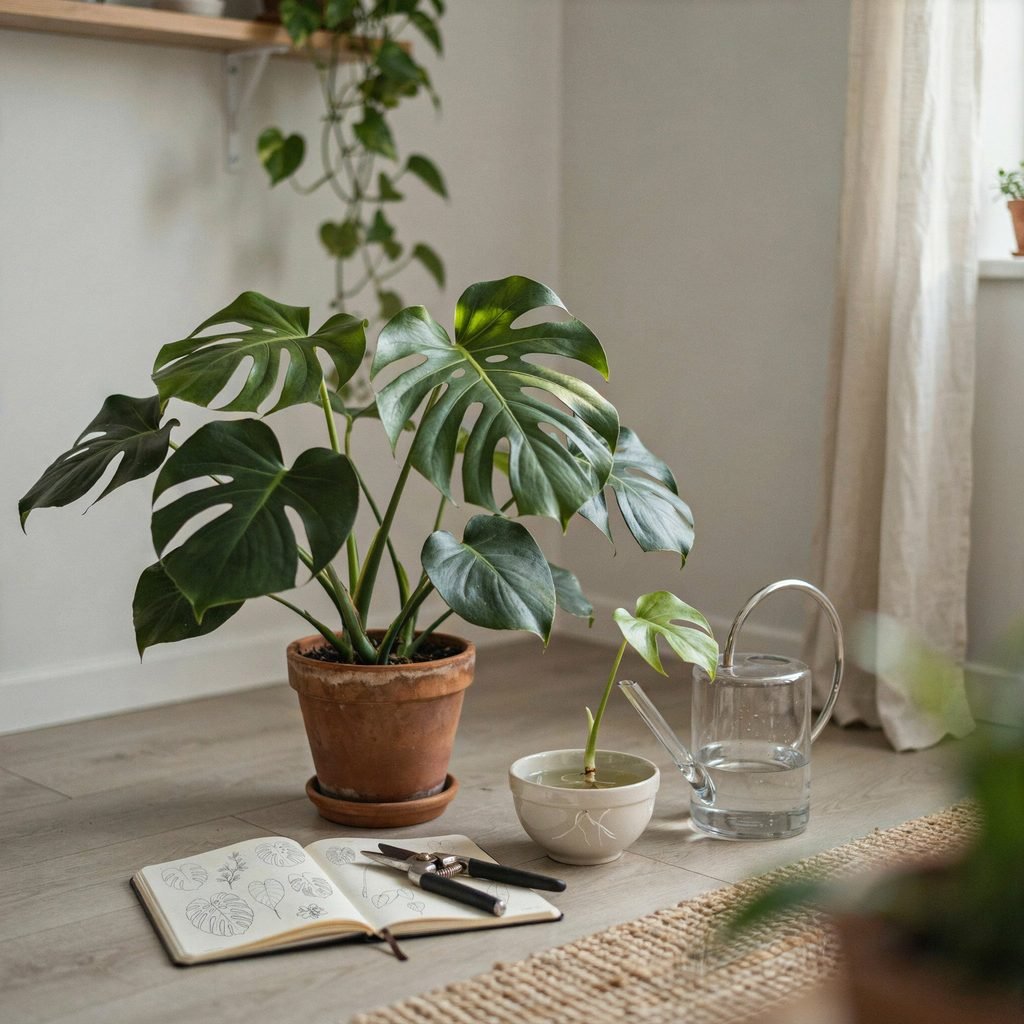
Use clean, sharp scissors or pruning shears to trim yellow or damaged leaves at the base of the stem. You can also prune to control size or shape, making your cut just above a Monstera node (the small bump where a leaf and aerial root emerge).
Every few weeks, wipe leaves with a damp cloth to remove dust. Clean leaves photosynthesize more efficiently and look their best. Avoid leaf-shine products that clog pores.
How to Propagate Monstera Deliciosa
Monstera propagation is one of the most rewarding parts of owning this plant. Here’s a step-by-step guide to propagating from a stem cutting with node.
What You’ll Need
- Clean, sharp pruning shears or a knife
- A cutting that includes at least one node and one leaf
- Optionally, a section of Monstera aerial roots
- A water propagation jar or a small pot with moist aroid mix
- Rooting hormone (optional but helpful for soil propagation)
Step-by-Step
- Identify a node. Look for the small brown bump on the stem where a leaf petiole meets the main vine. Aerial roots often grow from the same spot.
- Cut below the node. Make a clean cut about ½ inch below the node. Your cutting should include the node, at least one leaf, and ideally one aerial root.
- Let the cut callus for 10 to 15 minutes to reduce rot risk.
- Choose your method (water or soil—see below) and place the cutting.
- Wait patiently. Roots typically appear in 3 to 6 weeks. Keep the environment warm and bright.
- Transplant rooted cuttings into a 4-inch pot with aroid mix once roots reach 2 to 3 inches long.
Water Propagation vs. Soil Propagation
| Method | Pros | Cons |
|---|---|---|
| Water propagation | Easy to monitor root growth; fun to watch; no soil mess | Roots adapt to water and may struggle transitioning to soil; requires weekly water changes |
| Soil propagation | Roots grow directly in their final medium; less transplant shock | Harder to see progress; risk of rot if kept too wet |
Both methods work well. Many growers start in water for visibility, then transplant once roots are established.
Common Monstera Problems and Troubleshooting
Even with a solid plant care routine, issues pop up. Here’s how to diagnose the most common ones:
- Monstera yellow leaves: Usually overwatering or poor drainage. Check the soil moisture level. If the soil is soggy, reduce watering and inspect roots for rot.
- Monstera brown leaves (crispy edges): Low humidity, underwatering, or salt buildup from fertilizer. Trim affected edges and adjust care.
- Drooping leaves: Can mean either underwatering or overwatering. Check the soil. If dry, water thoroughly. If wet, improve drainage.
- Curling leaves: Often a humidity issue or a sign the plant is thirsty.
- Monstera leaves not splitting: The plant is too young or not receiving enough light. Increase bright indirect light and be patient.
- Leggy growth: Insufficient light. Move the plant closer to a window.
- Root rot: Mushy, black roots and a foul smell. Remove the plant, trim dead roots, repot in fresh, well-draining mix, and cut back on watering.
Monstera Pests
Watch for indoor plant pests, especially in dry indoor air:
- Spider mites: Tiny webs on leaf undersides; treat with neem oil treatment or insecticidal soap.
- Mealybugs: White cottony clusters; dab with rubbing alcohol or apply insecticidal soap.
- Scale insects: Brown bumps on stems; scrape off gently and treat with neem oil.
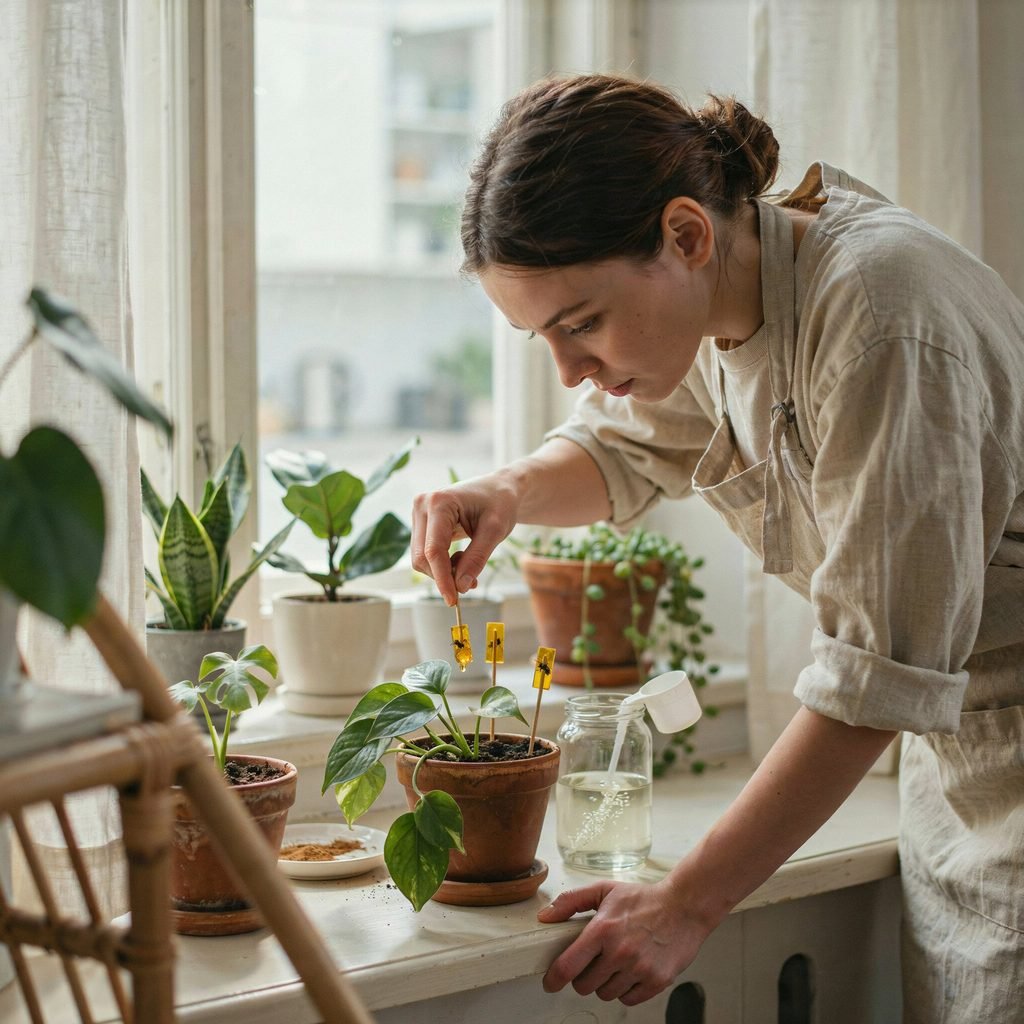
- Fungus gnats: Small flies around the soil surface; let the top layer dry out between waterings and consider a sticky trap.
Inspect your plant weekly, especially the undersides of leaves, to catch infestations early.
Is Monstera Deliciosa Toxic to Cats and Dogs?
Yes. Monstera toxic to cats and dogs is an important safety note. The plant contains insoluble calcium oxalate crystals. If chewed, these crystals cause oral irritation, excessive drooling, vomiting, and difficulty swallowing in pets.
Pet-safety tips:
- Place your Monstera on a high shelf or in a room pets can’t access.
- Train cats away from plants using deterrent sprays.
- If you suspect your pet has ingested Monstera, contact your veterinarian or the ASPCA Animal Poison Control Center (888-426-4435) immediately.
Seasonal Monstera Care Checklist
Spring
- Resume monthly fertilizing
- Check for pests as new growth emerges
- Repot if root-bound
- Increase watering as growth picks up
Summer
- Maintain consistent watering (soil dries faster in heat)
- Provide bright indirect light; shield from harsh afternoon sun
- Wipe leaves to remove dust
- Monitor humidity if running air conditioning
Fall
- Gradually reduce fertilizer
- Scale back watering as growth slows
- Move plant away from cold drafts near windows
Winter
- Water sparingly (every 2 to 3 weeks or when soil is dry)
- Stop fertilizing
- Use a humidifier to counteract dry indoor air from heating
- Avoid repotting or heavy pruning during dormant winter growth
Monstera Deliciosa Care at a Glance
| Care Factor | Recommendation |
|---|---|
| Light | Bright indirect light; east-facing window ideal |
| Watering | When top 2–3 inches of soil are dry (~every 7–14 days) |
| Soil | Aroid mix: potting soil + orchid bark + perlite + coco coir |
| Humidity | 50%–70%; use a humidity tray or humidifier |
| Temperature | 65°F–85°F; avoid below 50°F |
| Fertilizer | Balanced liquid fertilizer monthly in spring/summer |
| Propagation | Stem cutting with node; water or soil method |
FAQ: Monstera Deliciosa Care
How often should I water a Monstera deliciosa?
Check the top 2 to 3 inches of soil. When that layer feels dry, water thoroughly until excess water drains from the pot. For most US homes, this means roughly every 7 to 14 days in warmer months and every 2 to 3 weeks in winter.
Can Monstera deliciosa grow in low light?
It can survive in lower light, but growth will slow significantly, leaves will stay smaller, and you likely won’t see fenestrations. For healthy growth, aim for bright indirect light. A north-facing room or a spot far from windows is the minimum.
Why are my Monstera leaves not splitting?
Two main reasons: the plant is too young (fenestrations typically appear after 2 to 3 years) or it isn’t receiving enough light. Boost bright indirect exposure and ensure the plant is getting consistent water and occasional fertilizer. Patience is key.
Should I mist my Monstera?
Light misting won’t hurt, but it also won’t raise humidity meaningfully for more than a few minutes. A pebble tray, grouping plants together, or running a humidifier provides more consistent humidity. Focus on those methods over misting.
How do I make my Monstera grow bigger leaves?
Provide strong support (a moss pole or trellis), bright indirect light, regular feeding during spring and summer, and consistent watering. A climbing Monstera with aerial roots anchored into a moss pole will produce progressively larger, more fenestrated leaves over time.
Can I propagate Monstera without an aerial root?
Yes. The critical structure is the node, not the aerial root. As long as your stem cutting includes a node (the bump where a leaf attaches), new roots will form. An aerial root speeds things up but isn’t required.
What should I do if my Monstera has yellow leaves?
First, check the soil. If it’s waterlogged, hold off on watering and ensure the pot drains properly. If roots are black and mushy, trim them and repot in fresh mix. If the soil is bone dry, give the plant a thorough soak. Occasionally, a single older leaf yellows and drops naturally—that’s normal aging and no cause for alarm.
Final Thoughts
Monstera deliciosa care doesn’t have to be complicated. Give your Swiss cheese plant bright indirect light, water when the soil asks for it, use a chunky well-draining mix, and add a support for it to climb. Watch for pests, adjust for the seasons, and before long you’ll be rewarded with dramatic, fenestrated leaves that make any room feel like a slice of the tropics.
And the best part? Once your Monstera is thriving, you can propagate new plants to gift to friends, fill other rooms, or simply enjoy watching roots develop in a water jar on your windowsill.
Save this guide for your next watering day, share it with a fellow plant parent who just brought home their first Swiss cheese plant, or explore our related guides on indoor plant care, pothos care, philodendron care, and houseplant pest control to keep your entire green collection happy and healthy.
Happy growing! 🌿