If you’ve ever wondered why some gardens seem to thrive while others struggle with pests and poor yields, the secret might not be in the fertilizer or the watering schedule—it might be in what you’re planting next to what. Welcome to the world of companion planting, one of the oldest and most effective techniques in organic gardening. Whether you’re tending a sprawling backyard plot in Texas, a modest raised bed in Ohio, or a collection of containers on a Brooklyn balcony, understanding which vegetables grow well together can transform your harvest.
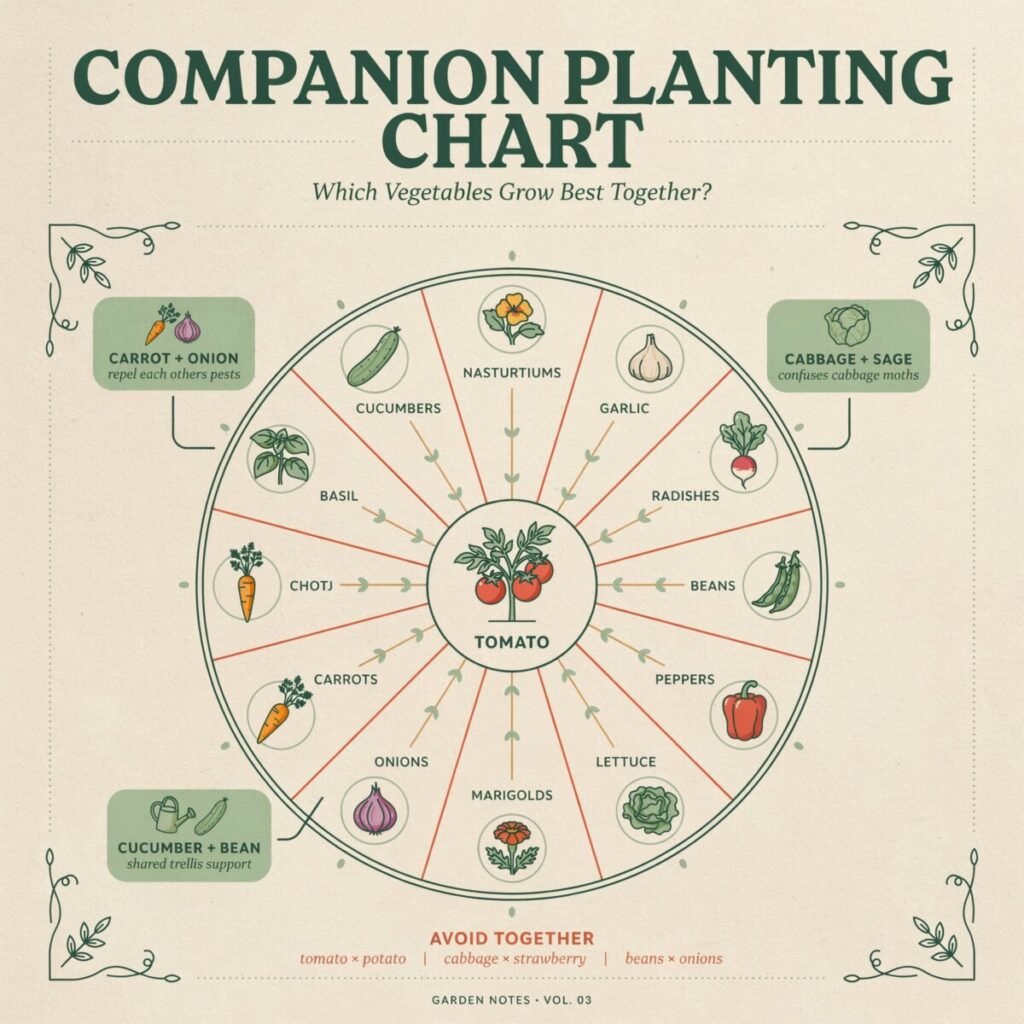
In this guide, you’ll find a practical companion planting chart, real-world pairing advice for popular crops like tomatoes, carrots, beans, and cucumbers, and a clear breakdown of which plant combinations to avoid. We’ll cover the science behind why certain plants help each other, share the ancient wisdom of the Three Sisters method, and help you plan a healthier, more productive vegetable garden this season.
Let’s dig in.
What Is Companion Planting?
Companion planting is the practice of growing compatible plants in close proximity so they benefit one another. These benefits can take many forms: attracting beneficial insects, repelling harmful pests, improving soil health, providing natural support, enhancing flavor, or even boosting overall yield. It’s a form of natural pest control and smart garden planning for beginners and experienced growers alike.
You may have heard of the Three Sisters planting method—one of the most famous examples of vegetable companion planting. Used for centuries by Indigenous peoples across North America, this technique combines three crops that support each other beautifully:
- Corn provides a tall stalk for the beans to climb.
- Pole beans fix nitrogen in the soil, feeding the corn and squash.
- Squash spreads along the ground, shading the soil to retain moisture and suppress weeds.
Together, these three plants create a self-sustaining mini-ecosystem. It’s a perfect illustration of how thoughtful crop pairing can do more than chemical fertilizers or pesticides ever could.
Why Companion Planting Works
You might be skeptical that simply placing plants near each other can have a measurable impact. But there’s real horticultural science behind companion planting. Here are the key reasons why it works:
1. Pest Management and Pest Confusion
Certain plants emit strong scents that mask the aroma of vulnerable crops, making it harder for pests to find their target. This concept, known as pest confusion, is one of the simplest and most effective forms of organic pest control in garden settings. For example, the strong smell of onions and garlic can confuse carrot flies, protecting your carrot crop.
2. Attracting Beneficial Insects
Flowers and herbs planted alongside vegetables can attract predatory insects—like ladybugs, lacewings, and parasitic wasps—that feed on common garden pests such as aphids and caterpillars. A pollinator-friendly garden doesn’t just help bees; it helps your vegetables too.
3. Nitrogen Fixation
Some plants, particularly legumes like beans and peas, work with beneficial soil bacteria to pull nitrogen from the air and convert it into a form that other plants can use. This nitrogen fixing process naturally enriches the soil without synthetic fertilizers, making beans and peas some of the best companion plants for vegetables that are heavy feeders.
4. Physical Support and Shade
Tall plants can act as natural trellises for climbing crops, while broad-leafed plants can provide shade for sun-sensitive varieties. This kind of symbiotic relationship maximizes your vegetable garden layout without the need for expensive structures.
5. Improved Nutrient Uptake
Different plants have different root depths. Deep-rooted plants can pull up nutrients from lower soil layers, making them available to shallow-rooted companions when their leaves decompose. This improves nutrient uptake across your garden.
6. Water Conservation
Ground-cover plants like squash or clover help retain soil moisture by shading the ground, reducing evaporation, and preventing erosion. This is particularly valuable in hot, dry climates across the US Southwest and Southeast.
7. Biodiversity
Monocultures—planting large areas of a single crop—invite disease and pests. Garden companion planting increases biodiversity, creating a more resilient ecosystem that can better withstand environmental stress.
Vegetable Companion Planting Chart
Here’s a quick-reference companion planting chart to help you plan your garden at a glance. Bookmark this section or print it out for your garden journal.
| Vegetable | Good Companions | Bad Companions | Why It Works |
|---|---|---|---|
| Tomatoes | Basil, carrots, marigolds, parsley, onions, asparagus | Brassicas (cabbage, broccoli), potatoes, fennel | Basil repels pests; marigolds deter nematodes. Brassicas stunt tomato growth. |
| Carrots | Onions, leeks, rosemary, sage, lettuce, radishes | Dill, parsnips, celery | Onions confuse carrot flies. Lettuce provides light shade. |
| Lettuce | Radishes, carrots, strawberries, chives, onions | Celery, parsley, cress | Radishes loosen soil. Chives deter aphids. |
| Beans (Bush & Pole) | Corn, squash, cucumbers, celery, strawberries | Onions, garlic, peppers, fennel | Beans fix nitrogen for corn. Alliums stunt bean growth. |
| Cucumbers | Peas, beans, corn, sunflowers, lettuce, radishes | Potatoes, sage, melons | Peas provide nitrogen. Sunflowers offer shade. |
| Peppers | Basil, carrots, onions, spinach, tomatoes | Beans, brassicas, fennel | Basil deters spider mites. Carrots loosen soil. |
| Onions & Garlic | Carrots, beets, cabbage, lettuce, tomatoes | Beans, peas, asparagus | Alliums repel a wide range of pests. |
| Peas | Carrots, radishes, cucumbers, beans, corn | Onions, garlic, potatoes | Peas fix nitrogen. Alliums inhibit growth. |
| Potatoes | Beans, corn, cabbage, horseradish, marigolds | Tomatoes, cucumbers, sunflowers, raspberries | Tomatoes and potatoes share blight susceptibility. |
| Cabbage & Brassicas | Dill, onions, rosemary, sage, celery | Tomatoes, peppers, strawberries, pole beans | Dill attracts beneficial wasps. Tomatoes stunt growth. |
| Zucchini & Squash | Corn, beans, nasturtiums, marigolds, radishes | Potatoes, pumpkins (if space is tight) | Nasturtiums repel squash bugs. |
| Radishes | Carrots, lettuce, peas, cucumbers, beans | Hyssop, cabbage, grapes | Radishes mature quickly and loosen soil. |
This companion planting chart covers the most common US garden crops. Keep in mind that local conditions—your USDA hardiness zone, soil type, and microclimate—will influence how strongly these pairings benefit your garden.
Best Vegetable Pairings by Crop
Let’s take a closer look at some of the most popular garden vegetables and their ideal companions.
Companion Planting for Tomatoes
Tomatoes are a staple of the American backyard garden, but they’re vulnerable to pests like hornworms, aphids, and blight. Here are the best companion plants for tomatoes:
- Basil: This classic pairing isn’t just great in the kitchen—basil repels thrips, flies, and mosquitoes, and many gardeners swear it improves tomato flavor.
- Marigolds: French marigolds release a substance that repels root-knot nematodes, one of the most destructive tomato pests.
- Carrots: You can harvest carrots before the tomato plants fully shade them out, making efficient use of garden space.
- Parsley: Attracts hoverflies, whose larvae feed on aphids.
Avoid planting tomatoes near brassicas (cabbage, broccoli, cauliflower) as they can stunt tomato growth, and keep them away from potatoes, which share many of the same diseases.
Companion Plants for Carrots
Carrots are relatively low-maintenance but benefit greatly from smart garden companion planting.
- Onions and Leeks: The strong scent of alliums confuses the carrot rust fly, a major pest.
- Rosemary and Sage: These aromatic herbs also deter carrot flies.
- Lettuce: Acts as a living mulch, keeping the soil cool and moist—perfect for carrots.
- Radishes: Radishes mature quickly and help loosen the soil for carrot roots.
Companion plants for carrots to avoid include dill (which can cross-pollinate and stunt growth) and parsnips (which attract the same pests).
Companion Plants for Beans
Beans are nitrogen fixers, making them incredibly generous neighbors in the garden. Here are the top companion plants for beans:
- Corn: The classic Three Sisters pairing. Beans climb the corn stalks and enrich the soil for both crops.
- Squash: Completes the Three Sisters trio, shading the soil and retaining moisture.
- Cucumbers: Both enjoy similar growing conditions and benefit from shared nitrogen.
- Celery and Strawberries: Beans improve soil fertility for these companions.
Avoid planting beans near onions, garlic, and other alliums, which release substances that inhibit bean growth.
Companion Plants for Cucumbers
Companion plants for cucumbers should include nitrogen fixers and shade providers.
- Peas: Like beans, peas fix nitrogen, giving cucumbers a nutrient boost.
- Sunflowers: Provide afternoon shade and attract pollinators.
- Radishes: Can be planted between cucumber plants to deter cucumber beetles.
- Lettuce: Makes efficient use of the shaded space beneath cucumber vines.
Keep cucumbers away from potatoes (which compete for nutrients) and sage (which can inhibit cucumber growth).
Companion Plants for Peppers
Peppers thrive in warm conditions and benefit from pest-repelling companions.
- Basil: Repels spider mites, aphids, and mosquitoes while attracting pollinators.
- Carrots: Loosen the soil and can be harvested early.
- Onions: Deter a wide range of pests with their strong scent.
- Spinach: Acts as a living mulch and can be harvested before peppers need the space.
Avoid planting peppers near beans and brassicas.
Companion Plants for Lettuce and Onions
- Lettuce pairs well with radishes, carrots, strawberries, and chives. Avoid celery and parsley.
- Onions pair well with carrots, beets, cabbage, lettuce, and tomatoes. Keep them far from beans and peas.
Vegetables That Should Not Be Planted Together
Just as some plants are best friends, others are sworn enemies in the garden. Knowing what not to plant together is just as important as knowing what grows well together. Here are the most problematic combinations:
1. Beans and Onions (or Garlic)
Alliums like onions, garlic, and leeks release antibacterial substances that kill the beneficial bacteria beans rely on for nitrogen fixation. The result? Stunted beans and reduced yields.
2. Tomatoes and Brassicas
Cabbage, broccoli, cauliflower, and kale can stunt tomato growth. Both are also heavy feeders, which means they’ll compete aggressively for the same nutrients.
3. Potatoes and Tomatoes
These two are members of the nightshade family and share many of the same pests and diseases, including early and late blight. Planting them together essentially creates a buffet for pathogens.
4. Potatoes and Sunflowers
Sunflowers release chemicals from their roots (a process called allelopathy) that can inhibit potato growth. They also compete for nutrients and space.
5. Cucumbers and Sage
Sage is a strong aromatic herb that can stunt cucumber growth and affect their flavor. Plant sage near brassicas instead.
6. Fennel and Almost Everything
Fennel is allelopathic and inhibits the growth of most garden vegetables. It’s best grown in its own dedicated bed or container.
7. Dill and Carrots
When dill matures, it can cross-pollinate with carrots and stunt their growth. Plant dill near cabbage or onions instead.
Companion Planting Tips for Raised Beds and Small Gardens
If you’re working with a raised bed or a small urban garden, raised bed companion planting requires extra thought about spacing and plant size. Here are some practical tips:
1. Use Vertical Space
In small gardens, train vining plants like cucumbers, peas, and pole beans to climb trellises. This frees up ground space for low-growing companions like lettuce or radishes.
2. Interplant Fast and Slow Growers
Pair fast-maturing crops (radishes, lettuce) with slow-growing ones (carrots, onions). By the time the slow growers need the space, you’ve already harvested the fast ones.
3. Plant in Succession
In small spaces, timing matters. Plant a row of peas in early spring, then follow with beans once the peas finish. Both fix nitrogen for the next crop.
4. Use Containers for Aggressive Herbs
Herbs like mint, fennel, and even basil can become invasive. Grow them in pots and place the pots near their companion vegetables to get the benefits without the sprawl.
5. Consider Plant Height and Sun Exposure
Place tall plants (corn, sunflowers, trellised tomatoes) on the north side of your raised bed so they don’t shade shorter plants. Use medium-height plants like peppers and bush beans in the middle, and low-growing plants like lettuce and radishes on the south-facing edge.
6. Maximize Edges
The edges of raised beds are perfect for trailing plants like nasturtiums and strawberries, which act as pest deterrents and living mulch.
Common Mistakes to Avoid in Companion Planting
Even experienced gardeners make these mistakes when first implementing vegetable companion planting:
1. Ignoring Spacing
Just because two plants are compatible doesn’t mean you should cram them together. Proper garden spacing ensures each plant gets enough sunlight, water, and nutrients. Overcrowding invites disease.
2. Planting Invasive Companions
Mint, lemon balm, and even some varieties of oregano can take over a garden bed. Always plant aggressive herbs in containers.
3. Forgetting Crop Rotation
Companion planting doesn’t replace the need for crop rotation. Planting the same crops (or their companions) in the same spot year after year depletes soil nutrients and encourages disease buildup.
4. Relying Only on Companions for Pest Control
Companion planting is a powerful tool, but it’s not a silver bullet. Combine it with other organic pest control in garden practices like hand-picking pests, using row covers, and maintaining healthy soil.
5. Not Considering Your Climate
What works in Maine may not work in Arizona. Adapt your companion planting vegetables list to your local USDA zone and microclimate. Heat-loving companions like basil and peppers thrive in the South, while cool-season companions like lettuce and radishes are better for Northern gardens.
6. Overlooking Root Competition
Some plants have aggressive root systems that will outcompete their neighbors. Avoid planting shallow-rooted crops near deep-rooted perennials or trees.
Frequently Asked Questions
Q: Can I plant flowers with my vegetables?
Absolutely! Flowers like marigolds, nasturtiums, zinnias, and sunflowers are excellent companions. They attract beneficial insects and pollinators, deter pests, and add beauty to your garden. Nasturtiums are particularly useful as trap crops, luring aphids away from your vegetables.
Q: Do companion plants need to be planted right next to each other?
Not always. Many companion plants work within a few feet of each other. For pest-confusion pairings (like onions and carrots), closer proximity is better. For nitrogen fixers (like beans and corn), being in the same bed is usually sufficient.
Q: Can I companion plant in containers?
Yes! Container gardening and companion planting work beautifully together. Just make sure your container is large enough for all the plants and that they have similar water and sunlight needs. A large pot with tomatoes, basil, and marigolds is a classic example.
Q: What are the best companion plants for a pollinator-friendly garden?
To create a pollinator-friendly garden, include flowers like borage, lavender, zinnias, cosmos, and sunflowers alongside your vegetables. Herbs like dill, cilantro, and parsley also attract pollinators when allowed to flower.
Q: Does companion planting really improve yields?
Yes, when done correctly. Studies have shown that companion planting can reduce pest damage by up to 50%, improve pollination rates, and enhance soil fertility—all of which contribute to higher yields. However, poor companion choices or overcrowding can actually reduce yields.
Q: Should I use companion planting instead of fertilizer?
Companion planting can reduce your need for synthetic fertilizers, especially when you include nitrogen-fixing plants like beans, peas, and clover. However, most gardens still benefit from compost and organic amendments to maintain soil health over time.
Q: How do I know if two plants are compatible?
A good rule of thumb is to research the specific needs and characteristics of each plant. Consider their sunlight requirements, water needs, root depth, and growth habits. The companion planting chart above is a great starting point, but don’t be afraid to experiment and keep notes on what works in your specific garden.
Conclusion: Start Small, Learn as You Grow
Companion planting is one of the most rewarding strategies for any home gardener. It connects you to centuries of agricultural wisdom—from the Indigenous Three Sisters method to modern organic gardening practices—while delivering real, measurable benefits: fewer pests, healthier soil, better yields, and a more beautiful garden.
You don’t need to overhaul your entire garden overnight. Start small. Try pairing tomatoes with basil this season. Plant marigolds around your peppers. Add a row of onions next to your carrots. Keep a garden journal and note what works and what doesn’t.
The beauty of vegetable companion planting is that it’s both a science and an art. The more you observe and experiment, the more intuitive it becomes. Over time, you’ll develop your own personalized companion planting chart based on what thrives in your specific soil, climate, and garden conditions.
So grab your seeds, consult the chart above, and start planning. Your garden—and your harvest—will thank you.