It’s mid-July, and your tomato plants are sprawling jungles of green. There are leaves everywhere, but when you look closely, you only see a handful of small, stubbornly green fruit. If this sounds familiar, you aren’t alone. Many US home gardeners face this exact issue, wondering why their lush plants aren’t delivering a bountiful harvest. The missing piece of the puzzle is often proper pruning.
Learning how to prune tomato plants for maximum fruit production is the secret weapon that transforms a leafy mess into a fruit-bearing powerhouse. Pruning isn’t just about aesthetics; it’s a vital horticultural practice that redirects the plant’s energy away from excess foliage and pumps it directly into developing plump, juicy tomatoes. By mastering this skill, you will drastically improve airflow through the canopy, significantly reduce the risk of fungal diseases, and make your weekly harvesting much easier and more consistent.
Whether you are growing heirlooms in a sprawling backyard garden or cherry tomatoes in patio pots, understanding the mechanics of plant growth will elevate your gardening game. By the end of this guide, you will know exactly how to prune tomato plants for maximum fruit production and enjoy the biggest, healthiest harvest you’ve ever grown.
Understanding Tomato Plant Types
Before grabbing your shears, you must know your tomato plant type. Tomatoes generally fall into two categories: indeterminate and determinate. Understanding the difference is the foundation of successful pruning indeterminate tomato plants and knowing when to leave pruning determinate tomato plants alone.
Indeterminate tomatoes, often referred to as vining tomatoes (or cordon tomatoes), grow, flower, and produce fruit continuously until the first frost kills them. Because they grow indefinitely, they produce massive amounts of foliage and side shoots. Pruning is essential to keep them manageable and productive. Popular US varieties like Beefsteak, Sun Gold Cherry, and many heirloom types fall into this category and benefit immensely from regular pruning.
Conversely, determinate tomatoes, commonly known as bush tomatoes, grow to a genetically predetermined height, set all their fruit at once, and then stop growing. Varieties like Roma, San Marzano, and many patio hybrids are determinate. Because their growth is naturally compact and their fruit sets in a concentrated window, heavy pruning can actually remove potential fruit-bearing branches and reduce your overall yield. For these tomato varieties for US gardens, minimal pruning—mostly just removing lower diseased leaves—is best.
How do you know which one you have? Always check your seed packets or nursery plant labels. They will explicitly state “indeterminate” or “determinate.” Taking a few seconds to read the label will save you from accidentally hacking away the future harvest of a determinate bush tomato in your backyard tomato gardening adventures.
Why Pruning Tomatoes Increases Fruit Production
You might wonder why cutting off perfectly good plant parts leads to more tomatoes. The science behind tomato pruning for bigger harvests comes down to energy allocation. A tomato plant has a finite amount of energy derived from photosynthesis and soil nutrients. When you allow every single side shoot to grow, the plant wastes massive amounts of energy building stems and leaves instead of developing fruit. By actively removing these energy-draining shoots, you force the plant to redirect its resources into swelling and ripening the existing fruit clusters.
Furthermore, pruning dramatically improves tomato plant airflow. In humid US climates, dense foliage traps moisture, creating the perfect breeding ground for fungal infections. Strategic pruning opens up the canopy, allowing wind to dry the leaves and helping you prevent tomato blight and other devastating diseases. It also maximizes sunlight exposure for tomatoes, which is critical for even ripening and developing complex, sweet flavors.
The impact on fruit quality is undeniable. By maintaining fewer, healthier main stems, the plant can pump more water and nutrients into each individual tomato, resulting in larger, more flavorful tomatoes rather than dozens of tiny, bland ones. Healthy tomato plants that are properly pruned simply perform better. Take my neighbor, Sarah, for example. For years, she let her indeterminate Cherokee Purples grow wild, resulting in a late, sparse harvest of small, cracking fruits. Last year, she started actively pruning them to two main stems. Not only did she avoid the late blight that wiped out her unpruned plants, but she also effectively doubled her harvest of massive, perfect slicing tomatoes.
When to Prune Tomato Plants (In US Climates)
Timing is everything in gardening, and knowing the best time to prune tomatoes ensures your plants recover quickly and continue thriving. For most US home gardeners, you should wait to begin your primary pruning until the plants are well-established in the ground and the very first flower clusters begin to appear and open. This usually falls in late spring to early summer, depending on your specific US gardening climate zones.
Gardeners in warmer Southern states (like USDA zones 8-10) might transplant and start pruning as early as April, while Northern gardeners (zones 3-6) will likely be waiting until June or even early July to make their first major cuts. Establishing a consistent tomato pruning schedule early in the season prevents the plant from wasting energy on unwanted growth in the first place.
Once your schedule is set, the time of day you prune matters just as much as the time of year. Always aim to prune in the cool, dry hours of the early morning. You must strictly avoid pruning during the blistering heat of very hot summer afternoons, as the open wounds will stress the plant and cause it to lose precious moisture. Equally important, never prune immediately after heavy rain or when the foliage is wet. Wet conditions are the primary vector for spreading bacterial and fungal spores from one plant to the next via your hands and tools. Waiting for the leaves to dry completely ensures that your pruning efforts result in robust growth rather than an outbreak of disease.
Tools and Safety: What You Need Before You Prune
Before you step into the garden, gathering the right pruning tools for tomatoes is essential for making clean cuts that heal quickly. You don’t need an expensive arsenal, but you do need a pair of clean, sharp bypass pruning shears or high-quality garden snips. Dull blades will crush and tear the delicate tomato stems, leaving jagged wounds that invite pests and pathogens.
You should also wear a good pair of gardening gloves. Tomato plants are covered in tiny trichomes (the fuzzy hairs) that can irritate sensitive skin, and the plant’s sap can stain your hands a stubborn yellowish-brown.
Most importantly, hygiene is critical to prevent tomato plant disease. Always keep a small bottle of rubbing alcohol, hand sanitizer, or a mild bleach solution in your pocket. You must sanitize pruning shears between every single plant. If you unknowingly snip a diseased leaf on one plant and move to the next without sterilizing your blades, you will act as a super-spreader for viruses like Tomato Mosaic Virus or bacterial spots. Taking ten seconds to wipe your blades protects your entire crop.
How to Prune Tomato Plants for Maximum Fruit Production: A Step-by-Step Guide
Now that you understand the “why” and “when,” let’s get into the “how.” Follow these practical steps to master the art of pruning.
1. Identify the Main Stem and Suckers
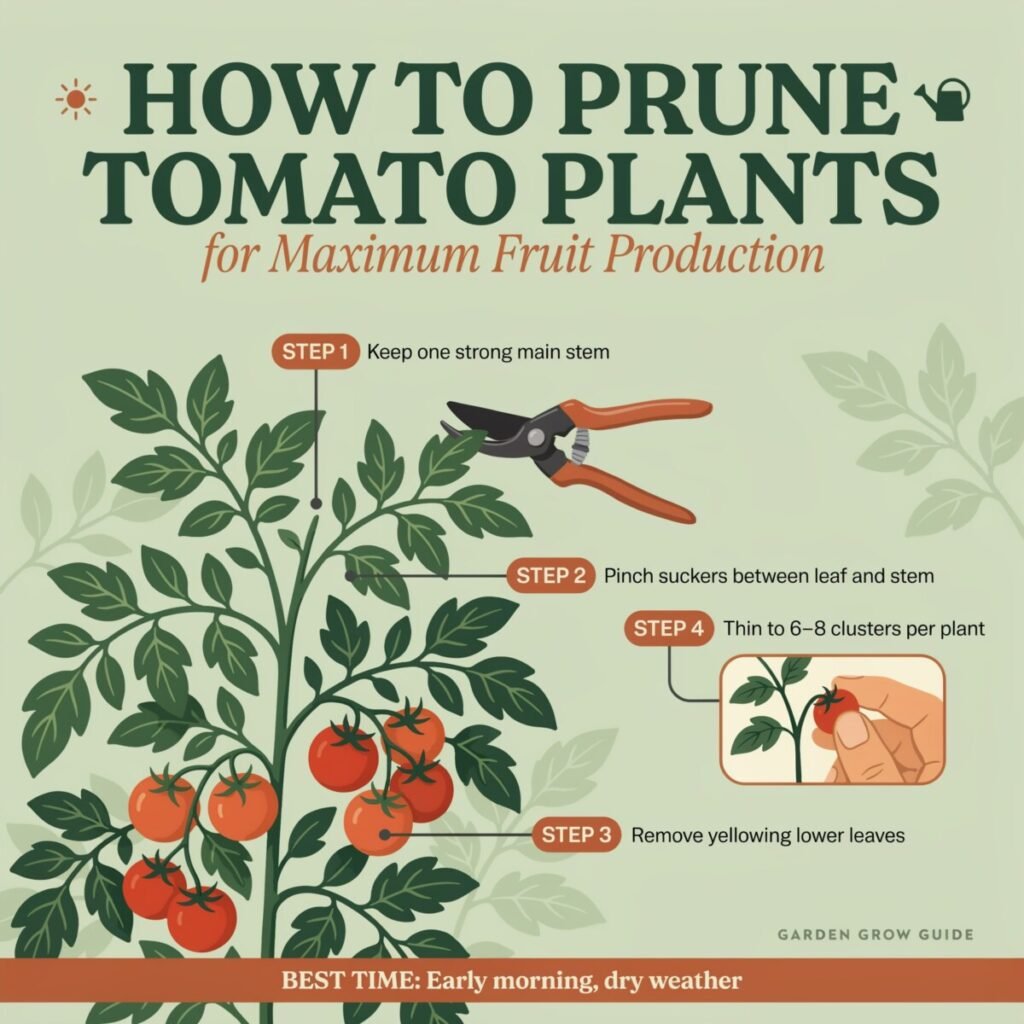
The absolute first step in tomato suckers removal is knowing exactly what to look for. The main stem is the central, thickest stalk growing straight up from the soil, terminating in a growing tip. Identify tomato suckers by looking at the “V” crotch or leaf axil where a leaf branch meets the main stem. The sucker is the small, new shoot sprouting right in that junction. If left alone, this sucker will grow into a full-sized secondary main stem, complete with its own leaves, flowers, and even more suckers. Pinch these off while they are small (under 2 inches) using your thumb and forefinger for a clean snap.
2. Decide How Many Main Stems to Keep
Your growing space dictates your strategy. For raised bed tomato pruning or small urban spaces, restrict your indeterminate plants to just one or two main stems. This keeps the footprint narrow and maximizes yield per square foot. In larger, sprawling garden plots, you can allow three or even four main stems, provided you have adequate space. Regardless of the number, you must pair this pruning strategy with robust tomato trellis and support systems. Multiple stems mean heavier overall fruit loads, requiring sturdy stakes or string trellises to keep everything upright and accessible.
3. Remove Lower Suckers and Leaves
As the plant grows upward, focus on lower leaf removal. Any leaves or suckers touching the soil are highly susceptible to soil-borne splashing pathogens. Remove all foliage below the very first flower cluster. This creates a crucial gap between the soil line and the canopy, drastically improving airflow. However, be careful not to strip the plant bare. One of the most common tomato pruning mistakes is over-pruning the upper canopy, which exposes the developing green fruit to harsh, direct midday sun. Always leave enough top foliage to shade the fruit and prevent tomato sunscald, which manifests as ugly, leathery, sunken white patches on the tomatoes.
4. Train and Support the Plant While Pruning
Pruning and supporting go hand-in-hand. As you clear away the excess suckers, take the time to secure the remaining main stems. When staking tomato plants, use soft plant ties, old strips of cotton cloth, or specialized tomato clips to gently attach the stem to the stake in a figure-eight pattern. Avoid wire or tight zip ties, which can girdle and strangle the stem as it thickens. While traditional tomato cages work okay for determinate bushes, they are rarely tall or strong enough for pruned indeterminate vines. Investing in a tall, heavy-duty tomato trellis in backyard gardens (like a Florida weave or cattle panel trellis) will make your ongoing pruning and harvesting incredibly easy.
5. Ongoing Maintenance Pruning Through the Season
Pruning is not a one-and-done task; it requires ongoing tomato plant care. Commit to maintenance pruning every 7 to 10 days throughout the summer. During these quick sessions, snap off any newly formed suckers, and immediately snip away any yellowing, spotted, or damaged leaves near the bottom of the plant to halt the spread of potential fungi. However, as autumn approaches, you must transition to end of season tomato pruning. About 3 to 4 weeks before your area’s first expected fall frost, “top” the plant by cutting off the very top growing tip and any remaining late flowers. This signals the plant to stop producing new fruit and focus all its remaining energy on ripening the existing green tomatoes before the cold weather hits.
Common Tomato Pruning Mistakes to Avoid
Even with the best intentions, gardeners can easily stumble into a few common pitfalls. Being aware of these tomato pruning mistakes will save you a lot of heartache and lost harvests.
First, avoid the urge to over-prune. Stripping a plant of too many leaves stresses the vegetation and exposes vulnerable, developing fruit to intense UV radiation. Always leave a “canopy umbrella” of leaves above the fruit clusters to avoid tomato sunscald.
Second, never aggressively prune determinate (bush) varieties. Because they are genetically programmed to grow to a specific size and set fruit all at once, hacking away their branches will only diminish your total yield. Stick to removing only dead or diseased lower leaves on bush types.
Third, be mindful of wet foliage pruning risks. Snipping wet plants is a fast track to disaster, as water acts as a highway for bacterial and fungal spores to enter fresh cuts. Always wait for a dry, breezy day to allow the wounds to callous over quickly.
Fourth, never skip cleaning your tools. Forgetting to wipe down your shears with alcohol is a massive failure in tomato disease prevention, easily spreading blight or mosaic viruses through your entire garden bed.
Finally, do not forget to support your pruned plants. When you remove lateral branches, the remaining main stems bear the entire weight of the fruit. Without proper staking or trellising, these heavy, top-heavy stems will inevitably snap under the weight of a summer storm or a heavy cluster of Beefsteaks.
Pruning for Different Setups: In-Ground, Raised Beds, and Containers
Your garden’s physical layout heavily influences your pruning strategy. In-ground tomato plants have the luxury of unlimited root space, allowing them to support massive top growth. However, this means they require much stronger staking and highly consistent pruning to maintain airflow across a wide footprint.
When it comes to raised bed tomato plant care, space is at a premium. Raised beds usually feature higher plant density. To prevent a jungle-like environment where diseases thrive, strict raised bed tomato pruning is necessary. Limiting your indeterminate plants to one or two main stems ensures every plant gets adequate sunlight and air circulation without shading out its neighbors.
Container tomato pruning requires a different balancing act. Because pots limit root volume, the plant cannot uptake enough water and nutrients to support a massive, sprawling canopy. Pruning container plants heavily helps balance the top growth with the restricted root zone, encouraging steady, stress-free fruit production rather than vegetative overwhelm.
For example, consider a US gardener growing a “Patio Princess” or “Tiny Tim” variety in a small 5-gallon bucket on an urban balcony. By diligently pinching off early suckers and keeping the plant to a single, well-staked central leader, they can maximize their limited soil nutrients. Instead of a weak, leafy bush with three tiny tomatoes, disciplined backyard tomato gardening tips like this yield a compact, sturdy plant loaded with dozens of sweet, full-sized cherry tomatoes all summer long.
FAQ Section: Quick Answers for US Gardeners
Do all tomato plants need pruning?
No. Only indeterminate (vining) tomatoes require regular, aggressive pruning to manage their endless growth. Determinate (bush) tomatoes naturally stop growing at a certain height and only need minimal pruning to remove diseased or soil-touching lower leaves.
How often should I prune tomato plants during the summer?
For the best results, plan on summer tomato pruning every 7 to 10 days. This quick, consistent routine allows you to snap off small suckers before they sap the plant’s energy and keeps the lower canopy clear of yellowing leaves.
Can I prune tomato plants that already have fruit?
Absolutely. In fact, pruning around developing fruit clusters is highly recommended to improve air circulation and sunlight penetration. Just be careful not to accidentally snip off the flower stems or the small green tomatoes themselves.
Is it okay to prune tomatoes in hot weather?
You should avoid pruning during the peak heat of the afternoon, as this severely stresses the plant and slows wound healing. Stick to early morning when temperatures are cooler, and never prune when the leaves are wet from rain or dew.
What should I do if I accidentally over-prune my tomato plant?
If you stripped too many leaves, the plant will be stressed and the fruit may be vulnerable to sunscald. Provide temporary shade using a shade cloth during the hottest part of the day, ensure the soil is consistently moist, and apply a light dose of liquid kelp fertilizer to help the plant recover and push out new growth. These home tomato gardening tips are crucial if you want to know how to increase tomato yield after a mistake.
Conclusion and Call to Action
Mastering how to prune tomato plants for maximum fruit production is undeniably one of the most effective, rewarding skills a US home gardener can develop. It takes a little bit of observation and a few minutes of your time each week, but the payoff—in the form of massive, disease-free, and incredibly flavorful harvests—is well worth the effort. If you are new to this, don’t be intimidated. Start with gentle pruning, observe how your plants respond, and adjust your strategy as the season progresses.
Ready to transform your garden? We challenge you to head outside and try these pruning steps on your tomato plants this week! Snap some before-and-after photos and share your results with us on social media or in the comments below. If you found this guide helpful, be sure to subscribe to our email list for more weekly gardening wisdom, or check out our related guides on [How to Fertilize Tomato Plants for Bigger Yields] and the [Best Tomato Varieties for US Backyard Gardens]. Happy pruning, and here’s to your biggest harvest yet!